
TimePen + Surprise Detergent Filament Bundle
Time-Pen + Detergent Filament Experimental Bundle
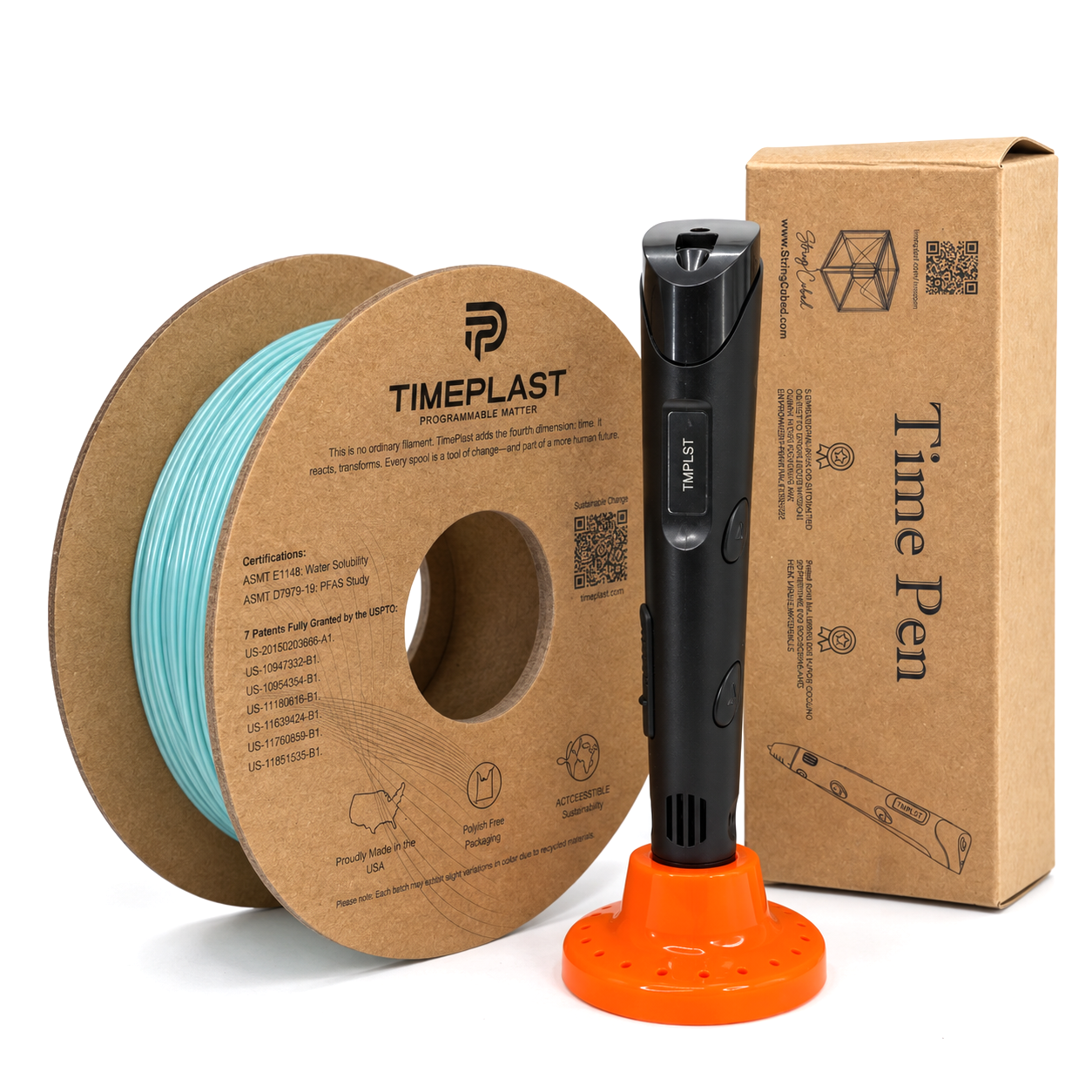
The $30 Includes one first-generation beta-testing Time-Pen + one surprise spool of TimePlast Detergent Filament
We’re trying something different.
Most new manufacturing technologies begin with an expensive, highly engineered machine and gradually become more affordable as production scales. With the Time-Pen, we’re starting from the opposite direction: build the simplest, lowest-cost device we can, put it in people’s hands for beta test at no additional cost, learn from it, and improve from there.
The goal is bigger than the pen itself. We believe the machine should not become the gatekeeper to experimenting with functional materials.
Why the Time-Pen Is Different
The Time-Pen may look like a conventional 3D-printing pen, but its extrusion system is being developed specifically around the unusual behavior of TimePlast materials.
Unlike conventional thermoplastic filaments such as PLA, TimePlast contains a very high proportion of water within its material structure. During extrusion, that water is not simply an inconvenience to remove. Its controlled release is part of how our material processes.
The first-generation Time-Pen therefore uses a 0.8 mm extrusion nozzle combined with what we call an adiabatic pressure chamber. The larger flow path and pressure chamber are intended to maintain the pressure required to move the material while simultaneously providing enough opportunity for water vapor generated during extrusion to escape.
That vapor release is critical.
If the extrusion pathway is too restrictive, as it can be in conventional printing pens with smaller nozzles and extrusion chambers designed for ordinary plastics, the water contained within TimePlast cannot escape efficiently enough. The material can then experience an improper thermal and pressure profile during extrusion.
For TimePlast, that matters because the water leaving the material also contributes to our vapor-cooling process. As water transitions into vapor and leaves the extruded structure, it removes heat from the material. This helps cool the deposited TimePlast rapidly while reducing the thermal exposure experienced by the functional payload incorporated into the filament.
That payload could be detergent, proteins, seeds, photovoltaic components, pigments, minerals, or other functional ingredients depending on the TimePlast formulation.
In other words, the Time-Pen is not simply trying to melt plastic and push it through a hole. It is trying to manage a small thermodynamic process:
Pressure → Extrusion → Vapor Release → Rapid Cooling → Functional Material Deposition
Without sufficient vapor release, the material may not process as intended and excessive thermal exposure could compromise the performance of temperature-sensitive functional ingredients.
That is also why we chose a 0.8 mm nozzle. It gives TimePlast substantially more room to flow and release vapor than the much smaller extrusion paths commonly used for fine-detail plastic printing. The tradeoff is resolution: this first-generation pen is designed primarily for functional deposition rather than precision 3D printing.
And that distinction is important. The Time-Pen is not intended to compete with a $500 desktop 3D printer. It is an experiment in making functional-material manufacturing accessible with an extremely inexpensive handheld device.
This is Generation One. It will require experimentation, properly dried filament, and some patience. But if we can make this process work reliably in a device this simple and inexpensive, the printing machine itself no longer has to be the gatekeeper to TimePlast.
The objective is not the perfect pen. The objective is the simplest possible machine capable of unlocking functional materials.
Instead of starting with a machine that costs hundreds of dollars, this experiment begins with a pen that costs us only a few dollars to produce. For this launch, we’re including the first-generation Time-Pen at no additional charge with the purchase of a $30 spool of TimePlast Detergent Filament.
Why we’re doing this
Imagine experimenting with TimePlast without needing a full 3D printer. A simple handheld extrusion tool could eventually let people make small functional objects using materials designed for very different purposes: detergent and soap structures, photovoltaic materials, lawn-repair patches, glow-in-the-dark signs, protein-containing fishing lures, and many other experimental TimePlast formulations.
This first version is the beginning of that idea, not the finished product.
Please expect a learning curve. The first-generation Time-Pen is experimental and will not perform like a sophisticated desktop 3D printer. We strongly recommend practicing with standard PLA first to become familiar with the pen's feeding speed, pressure, and temperature controls before moving to TimePlast.
TimePlast filament also needs to be properly dried before use for the best results.
You are effectively joining us at Generation One.
Our objective is to improve the Time-Pen generation by generation until functional-material printing becomes something almost anyone can experiment with, without the machine standing between the person and the material.
The material is the technology. The machine should simply unlock it.
HOW IT WORKS
Connect the Time Pen to power using the included USB cable and press the Load button to begin heating. The indicator light will turn green when the pen is ready.
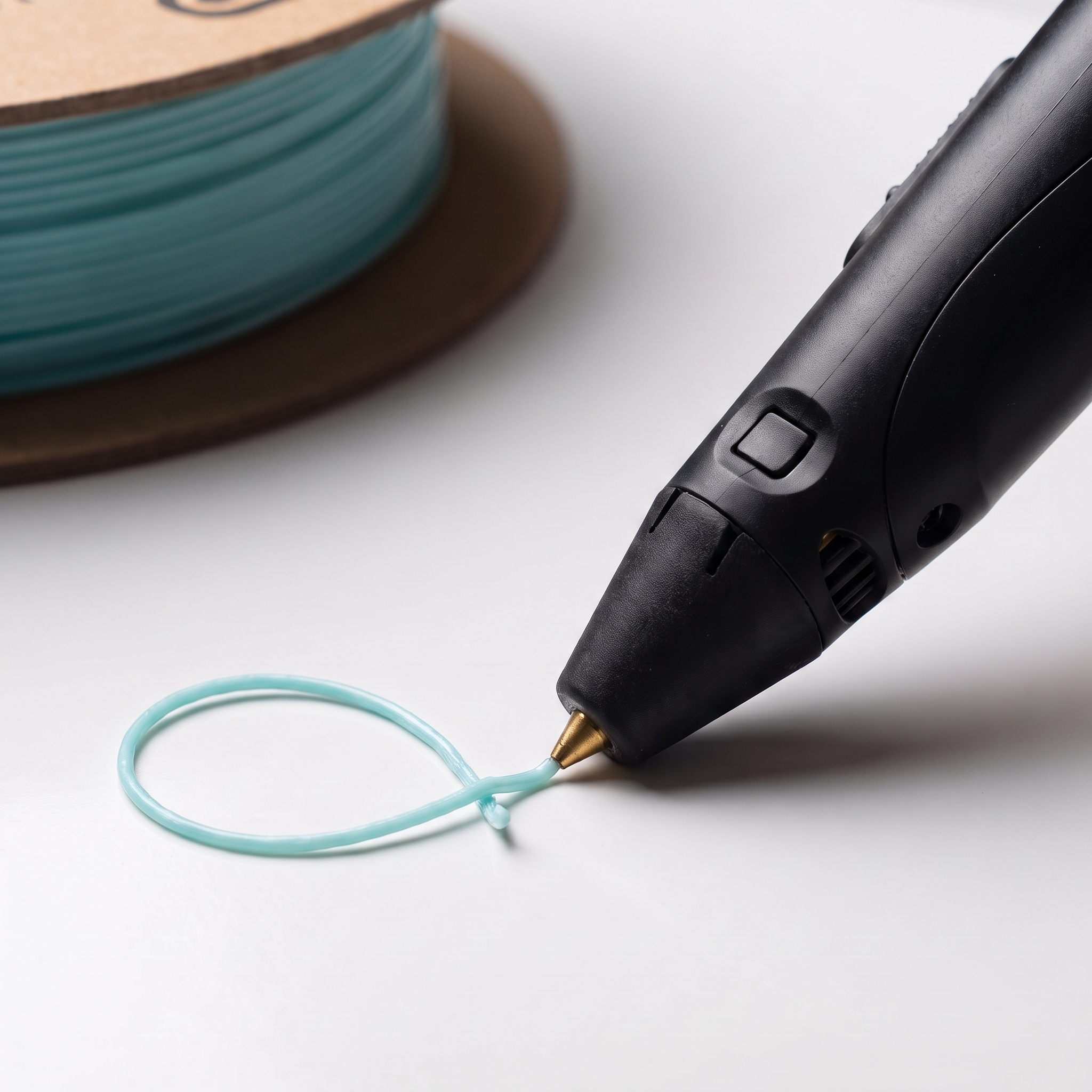
Press the Load button to begin extruding filament and use the speed controller to adjust the extrusion rate as you create. Press the Load button again to stop.
WHAT’S INCLUDED
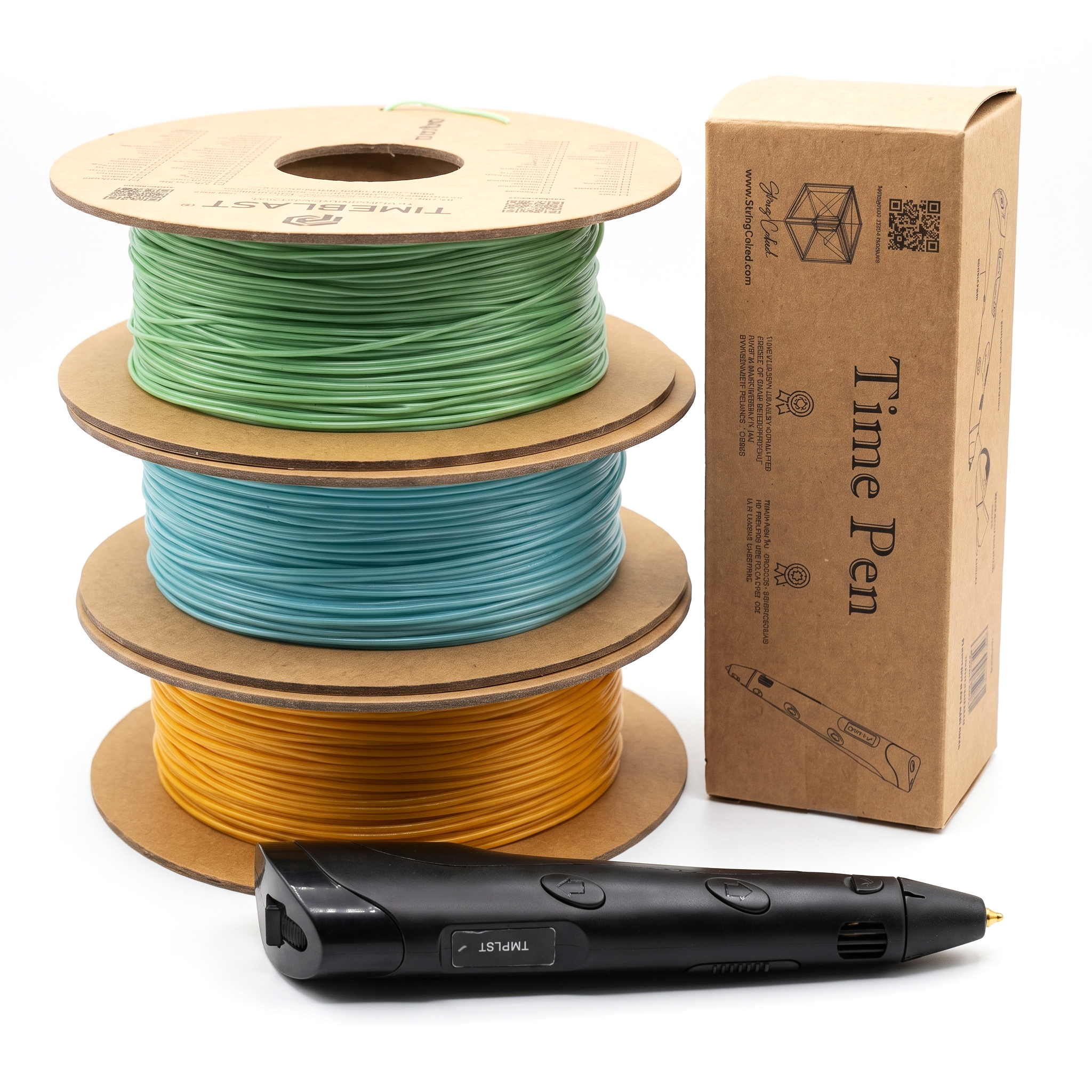
One Time Pen
One full surprise spool of TimeMass detergent filament
One USB cable
One pen holder
One printed instruction manual
PRODUCT DETAILS
Adjustable extrusion speed
0.8 mm nozzle
210°C to 220°C operating temperature
DC 5V/2A USB power input
Load and unload controls
Designed for use with Timeplast filaments
EXPERIMENTAL USE
The Time Pen is designed for creative experimentation, three-dimensional modeling, and functional prototyping with Timeplast materials.
Operate the device in a well-ventilated area. The nozzle becomes extremely hot during use and should not be touched. The Time Pen is not intended/recommended for children under 8 years old. Adult supervision is required for children ages 8 and older.
Spool colors will vary based on current availability and cannot be selected.
Shipping and applicable taxes are calculated at checkout.
These filaments are experimental. They are for industrial and commercial use only after independent verification for each application, and customers must prototype and certify their own product as required by law.
Time-Pen + Detergent Filament Experimental Bundle
The $30 Includes one first-generation beta-testing Time-Pen + one surprise spool of TimePlast Detergent Filament
We’re trying something different.
Most new manufacturing technologies begin with an expensive, highly engineered machine and gradually become more affordable as production scales. With the Time-Pen, we’re starting from the opposite direction: build the simplest, lowest-cost device we can, put it in people’s hands for beta test at no additional cost, learn from it, and improve from there.
The goal is bigger than the pen itself. We believe the machine should not become the gatekeeper to experimenting with functional materials.
Why the Time-Pen Is Different
The Time-Pen may look like a conventional 3D-printing pen, but its extrusion system is being developed specifically around the unusual behavior of TimePlast materials.
Unlike conventional thermoplastic filaments such as PLA, TimePlast contains a very high proportion of water within its material structure. During extrusion, that water is not simply an inconvenience to remove. Its controlled release is part of how our material processes.
The first-generation Time-Pen therefore uses a 0.8 mm extrusion nozzle combined with what we call an adiabatic pressure chamber. The larger flow path and pressure chamber are intended to maintain the pressure required to move the material while simultaneously providing enough opportunity for water vapor generated during extrusion to escape.
That vapor release is critical.
If the extrusion pathway is too restrictive, as it can be in conventional printing pens with smaller nozzles and extrusion chambers designed for ordinary plastics, the water contained within TimePlast cannot escape efficiently enough. The material can then experience an improper thermal and pressure profile during extrusion.
For TimePlast, that matters because the water leaving the material also contributes to our vapor-cooling process. As water transitions into vapor and leaves the extruded structure, it removes heat from the material. This helps cool the deposited TimePlast rapidly while reducing the thermal exposure experienced by the functional payload incorporated into the filament.
That payload could be detergent, proteins, seeds, photovoltaic components, pigments, minerals, or other functional ingredients depending on the TimePlast formulation.
In other words, the Time-Pen is not simply trying to melt plastic and push it through a hole. It is trying to manage a small thermodynamic process:
Pressure → Extrusion → Vapor Release → Rapid Cooling → Functional Material Deposition
Without sufficient vapor release, the material may not process as intended and excessive thermal exposure could compromise the performance of temperature-sensitive functional ingredients.
That is also why we chose a 0.8 mm nozzle. It gives TimePlast substantially more room to flow and release vapor than the much smaller extrusion paths commonly used for fine-detail plastic printing. The tradeoff is resolution: this first-generation pen is designed primarily for functional deposition rather than precision 3D printing.
And that distinction is important. The Time-Pen is not intended to compete with a $500 desktop 3D printer. It is an experiment in making functional-material manufacturing accessible with an extremely inexpensive handheld device.
This is Generation One. It will require experimentation, properly dried filament, and some patience. But if we can make this process work reliably in a device this simple and inexpensive, the printing machine itself no longer has to be the gatekeeper to TimePlast.
The objective is not the perfect pen. The objective is the simplest possible machine capable of unlocking functional materials.
Instead of starting with a machine that costs hundreds of dollars, this experiment begins with a pen that costs us only a few dollars to produce. For this launch, we’re including the first-generation Time-Pen at no additional charge with the purchase of a $30 spool of TimePlast Detergent Filament.
Why we’re doing this
Imagine experimenting with TimePlast without needing a full 3D printer. A simple handheld extrusion tool could eventually let people make small functional objects using materials designed for very different purposes: detergent and soap structures, photovoltaic materials, lawn-repair patches, glow-in-the-dark signs, protein-containing fishing lures, and many other experimental TimePlast formulations.
This first version is the beginning of that idea, not the finished product.
Please expect a learning curve. The first-generation Time-Pen is experimental and will not perform like a sophisticated desktop 3D printer. We strongly recommend practicing with standard PLA first to become familiar with the pen's feeding speed, pressure, and temperature controls before moving to TimePlast.
TimePlast filament also needs to be properly dried before use for the best results.
You are effectively joining us at Generation One.
Our objective is to improve the Time-Pen generation by generation until functional-material printing becomes something almost anyone can experiment with, without the machine standing between the person and the material.
The material is the technology. The machine should simply unlock it.
HOW IT WORKS
Connect the Time Pen to power using the included USB cable and press the Load button to begin heating. The indicator light will turn green when the pen is ready.
Press the Load button to begin extruding filament and use the speed controller to adjust the extrusion rate as you create. Press the Load button again to stop.
WHAT’S INCLUDED
One Time Pen
One full surprise spool of TimeMass detergent filament
One USB cable
One pen holder
One printed instruction manual
PRODUCT DETAILS
Adjustable extrusion speed
0.8 mm nozzle
210°C to 220°C operating temperature
DC 5V/2A USB power input
Load and unload controls
Designed for use with Timeplast filaments
EXPERIMENTAL USE
The Time Pen is designed for creative experimentation, three-dimensional modeling, and functional prototyping with Timeplast materials.
Operate the device in a well-ventilated area. The nozzle becomes extremely hot during use and should not be touched. The Time Pen is not intended/recommended for children under 8 years old. Adult supervision is required for children ages 8 and older.
Spool colors will vary based on current availability and cannot be selected.
Shipping and applicable taxes are calculated at checkout.
These filaments are experimental. They are for industrial and commercial use only after independent verification for each application, and customers must prototype and certify their own product as required by law.